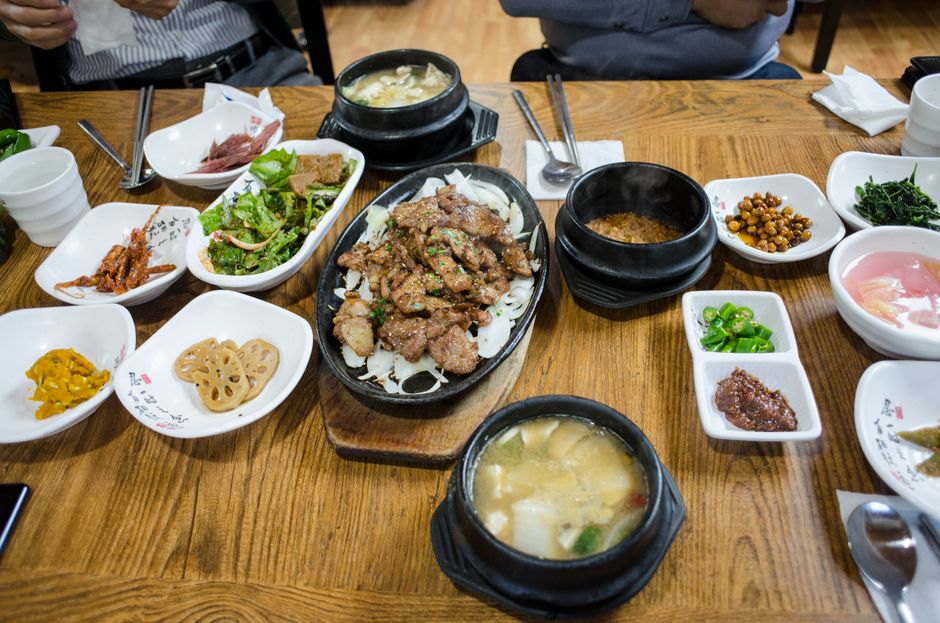
Doenjang jjigae (fermented soybean paste stew) is one of the most common dishes on a Korean dinner table, often served daily alongside rice and banchan. Its deep, savory flavor comes from doenjang, a fermented soybean paste that gives the stew a complexity no other seasoning quite replicates. The recipe below covers building the broth, timing the vegetables, and adjusting the seasoning so the stew comes out balanced rather than one-note.

Ingredients at a Glance
The stew depends on quality doenjang and a proper broth; everything else — vegetables, protein, mushrooms — is flexible. Doenjang keeps in the refrigerated section of Korean grocery stores, usually near gochujang (Korean chili paste). If a specific vegetable isn’t available, most root vegetables or leafy greens can stand in, though the combination below is the traditional one.
| Ingredient | Amount | Substitution / Notes |
|---|---|---|
| Doenjang (fermented soybean paste) | 3-4 tablespoons (45-60g) | Use good quality Korean brand. |
| Gochujang (Korean chili paste) | 1 teaspoon (5g) | Optional, for a slight kick. Adjust to taste. |
| Garlic, minced | 2 cloves (10g) | Fresh is best. |
| Dried anchovies (for broth) | 6-8 large (15-20g) | Omit for vegetarian. Substitute with vegetable broth or water + dash of soy sauce. |
| Dried kelp (dashima/kombu) | 1 (4×4 inch) piece (10g) | Omit for vegetarian. Substitute with vegetable broth. |
| Water | 3 cups (720ml) | Filtered water recommended for broth. |
| Firm or medium-firm tofu | ½ block (7-8 oz / 200g), cubed | Silken tofu can be used, but will break apart more easily. |
| Zucchini | ½ medium (100g), half-moons | Korean zucchini (Aehobak) is ideal; regular zucchini works. |
| Potato | 1 small (150g), peeled, cubed | Yukon Gold or similar waxy potato. |
| Onion | ½ medium (100g), sliced | Yellow or white onion. |
| Mushrooms (e.g., enoki, shiitake) | ½ cup (50g) | Any mushroom variety works. |
| Green chili (e.g., Cheongyang or jalapeño) | 1 (10g), sliced | Optional, for heat. Remove seeds for less spice. |
| Scallions | 1 stalk (10g), chopped | For garnish. |
| Optional: Pork belly or beef brisket | 4 oz (113g), thinly sliced | Cut into bite-sized pieces. |
| Optional: Clams or shrimp | 4 oz (113g) | Adds seafood flavor. |
Step-by-Step Instructions
Most of the effort is in the chopping — once that’s done, the stew comes together in under 30 minutes. The steps below build the broth first, then add ingredients roughly in order of how long they take to cook, so nothing turns mushy or undercooked.
- Prepare the Anchovy-Kelp Broth (if using): In a medium pot, combine 3 cups (720ml) of water with dried anchovies (guts removed for less bitterness) and dried kelp. Bring to a boil, then reduce heat and simmer for 10-15 minutes. Remove and discard the anchovies and kelp. If not using, simply heat 3 cups of water or vegetable broth.
- Prepare Vegetables: While the broth simmers, wash and chop all your vegetables. Cube the tofu, slice the zucchini into half-moons, dice the potato, slice the onion, and chop the green chili and scallions. If using meat, slice it thinly.
- Combine Paste Mixture: In a small bowl, mix the doenjang, gochujang (if using), and minced garlic with 2-3 tablespoons of the prepared broth until a smooth paste forms. This helps it dissolve evenly in the stew.
- Start the Stew: In a ttukbaegi (Korean earthenware pot) or a medium heavy-bottomed pot, add the broth. Bring it to a gentle boil over medium-high heat.
- Add Flavor Base: Stir in the doenjang paste mixture until fully dissolved.
- Add Harder Vegetables: Add the cubed potato and sliced onion to the simmering broth. Cook for about 5-7 minutes, or until the potatoes start to soften slightly.
- Add Meat/Seafood (Optional): If using pork belly, beef, or clams, add them now. Cook until the meat is no longer pink or the clams begin to open.
- Add Remaining Vegetables & Tofu: Stir in the zucchini and mushrooms. Add the cubed tofu gently to the pot.
- Simmer to Perfection: Reduce the heat to medium-low and let the stew simmer for another 5-10 minutes, or until all vegetables are tender and the flavors have melded. Do not overcook the tofu or zucchini.
- Add Green Chili: Stir in the sliced green chili a minute or two before serving for a fresh kick.
- Taste & Adjust: Taste the stew and adjust seasoning if necessary. You might add a pinch more doenjang for saltiness/umami or a dash of soy sauce.
- Garnish & Serve: Garnish with chopped scallions immediately before serving. Serve piping hot with a bowl of freshly cooked rice and various banchan (side dishes).
Pro Tips for Best Results
A few adjustments separate a flat stew from a well-rounded one — mostly a matter of ingredient quality and timing.
- Invest in Good Doenjang: The quality of your doenjang is paramount. Look for traditional, darker, and more artisanal brands if possible, often found in larger tubs. These typically have a richer, more complex flavor than mass-produced varieties. Some even come with whole soybeans visible, indicating a more traditional fermentation.
- Build a Flavorful Broth: A proper anchovy-kelp broth (yuksu) provides a crucial umami base. Don’t skip removing the anchovy guts to prevent bitterness. If you’re vegetarian, a rich mushroom broth or even good quality vegetable broth will work wonders.
- Don’t Overcook Vegetables: Add vegetables in stages based on their cooking time. Potatoes and onions go in first, then zucchini and mushrooms. Tofu should be added towards the end to prevent it from breaking apart. Vegetables should be tender-crisp, not mushy.
- Adjust Spice to Your Liking: The amount of gochujang and green chili is entirely customizable. For less heat, omit the gochujang and use a milder pepper. For more heat, add an extra chili or a pinch of red pepper flakes (gochugaru).
- Simmer, Don’t Boil Vigorously: Once all ingredients are in, a gentle simmer allows the flavors to meld beautifully without overcooking the delicate ingredients or evaporating too much liquid.
- Taste and Adjust Seasoning: Always taste your stew before serving. Doenjang varies in saltiness, so you might need a tiny dash of salt or a bit more doenjang to reach your preferred seasoning. A touch of sugar (1/2 teaspoon) can also balance the savory notes.
- Serve in a Ttukbaegi: If you have a ttukbaegi (Korean earthenware pot), serving the stew directly in it keeps it bubbling hot at the table, enhancing the experience. If not, any small, heat-retaining pot works.
Variations & Customizations
The doenjang base stays constant while the protein and vegetables can be swapped freely, which makes this a good dish for using up whatever is on hand.

- Seafood Doenjang Jjigae (Haemul Doenjang Jjigae): For a lighter, briny flavor, replace or supplement meat with fresh seafood. Clams, mussels, shrimp, or even small pieces of cod or pollock work wonderfully. Add seafood towards the end of cooking to prevent overcooking.
- Beef/Pork Doenjang Jjigae (Sogogi/Dwaejigogi Doenjang Jjigae): For a heartier stew, add thinly sliced beef brisket or pork belly. Sauté the meat briefly in a little sesame oil before adding the broth to build a deeper flavor base. This adds a rich, savory depth.
- Vegetarian/Vegan Doenjang Jjigae: Easily make this stew plant-based by omitting the anchovy-kelp broth and using a good quality vegetable broth or mushroom broth instead. Ensure your doenjang is vegan (most are, but check labels). Load up on extra vegetables like spinach, Napa cabbage, or radish for added texture and nutrients.
- Mushroom Lover’s Doenjang Jjigae: Enhance the earthy flavors by adding a wider variety of mushrooms such as oyster mushrooms, king oyster mushrooms, or more shiitake. Mushrooms contribute a meaty texture and a lot of umami, making it a great option for vegetarian versions.
- Spicy Doenjang Jjigae: For those who love heat, increase the amount of gochujang and green chili. You can also add a teaspoon of gochugaru (Korean chili flakes) along with the doenjang paste mixture for a deeper, fiery kick.
Doenjang Basics, Vegan Swaps, and Fixes
What exactly is doenjang, and where can I buy it?
Doenjang is a traditional Korean fermented soybean paste, similar in concept to Japanese miso but typically saltier, more pungent, and coarser in texture. It’s made from fermented soybeans and brine, offering a deeply savory, earthy, and umami-rich flavor that is fundamental to Korean cuisine. There are different types, from darker, more traditionally made versions (often labeled ‘Hansik Doenjang’ or ‘Jae Rae Doenjang’) to lighter, more commercial varieties.
You can find doenjang in the refrigerated section of most Asian grocery stores, particularly those specializing in Korean ingredients. It’s usually sold in plastic tubs or containers. Online Asian food retailers are also a great source if you don’t have a local store. When selecting, look for brands that list soybeans and salt as primary ingredients, and consider trying a traditional brand for the most authentic flavor profile.
Can I make doenjang jjigae vegetarian or vegan?
Yes. The main component to adjust is the broth: instead of dried anchovies and kelp, use a good quality vegetable broth or a homemade mushroom broth as your base. Many commercial doenjang brands are naturally vegan, but check the ingredient list to be sure no animal products are included.
For added flavor and texture in a plant-based version, increase the amount of mushrooms (shiitake, oyster, enoki) and other hearty vegetables like Napa cabbage, radish, or sweet potato. A tablespoon of minced rehydrated dried shiitake mushrooms adds an extra umami boost.
Why is my doenjang jjigae bitter, and how can I fix it?
A common cause is not properly preparing the dried anchovies used for broth — the dark guts inside can impart a strong, bitter flavor. Always pinch off and discard the heads and guts before using them. Briefly toasting the anchovies in a dry pan before adding water can also mellow their flavor.
Another possible cause is an overly fermented or aged doenjang with a stronger, more pungent profile. If yours is very strong, reduce the amount slightly or balance it with a touch more gochujang and a tiny pinch of sugar (about 1/2 teaspoon). Overcooking vegetables like zucchini can also introduce a subtle off-flavor, so cook them only until just tender.
What are some common side dishes to serve with doenjang jjigae?
Doenjang jjigae is typically served as part of a larger Korean meal, always accompanied by freshly steamed white rice, with spoonfuls of rice mixed into the stew as you eat. A variety of banchan (small side dishes) round out the meal with contrasting textures and flavors.
Popular banchan to serve alongside include kimchi (fermented cabbage) for a spicy, tangy counterpoint; seasoned vegetable side dishes like sigeumchi namul (seasoned spinach) or kongnamul muchim (seasoned bean sprouts); and sometimes a simple grilled fish or Korean egg roll (gyeran mari).
Serving & Storage
Doenjang jjigae is often served bubbling hot directly from the stove in a ttukbaegi (earthenware pot), which keeps it warm throughout the meal. Diners typically share the pot, scooping portions into individual rice bowls. Garnish with chopped scallions just before serving.
Let any leftovers cool completely to room temperature before transferring to an airtight container. It keeps in the refrigerator for 3-4 days. Reheat gently on the stovetop over medium-low heat until simmering again, adding a splash of water or broth if it has thickened too much. The flavors often deepen overnight, so leftovers can taste even better the next day.